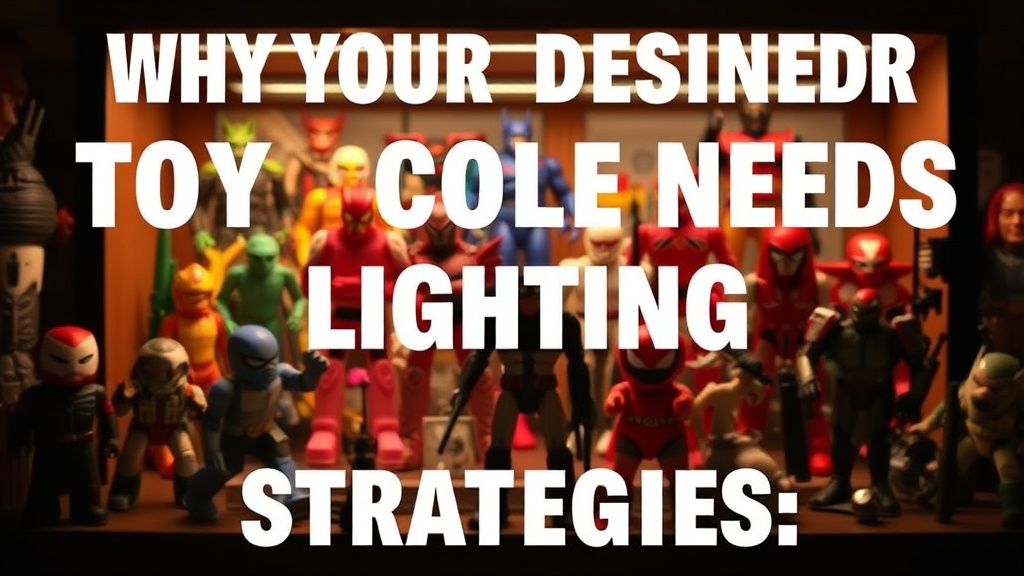
Why Your Designer Toy Collection Needs Specialized Lighting Strategies

Most collectors think that a bright room is a good thing. They assume that if they can see every detail of a high-end vinyl figure or a limited edition designer toy, they're doing it right. But there's a massive difference between visibility and preservation. If you're using standard household light bulbs or placing your collection near a window, you aren't just showing off your pieces—you're actively degrading them. Light is a silent killer of color saturation and material integrity.
High-end collectibles, especially those made from soft vinyl, resin, or delicate textiles, are incredibly sensitive to light-induced chemical changes. It isn't just about the light you can see; it's about the energy being transferred to the surface of your items. This post breaks down the specific ways light affects your collection and how to light your display without destroying the value of your pieces.
Does UV Light Damage Designer Toys?
The short answer is yes. Ultraviolet (UV) radiation is the primary culprit behind the "fading phenomenon" seen in many vintage and modern designer toy collections. UV rays have enough energy to break down the chemical bonds in pigments and polymers. When this happens, you see colors shift from vibrant hues to dull, washed-out versions of their former selves. It's not just the paint; the actual material of the toy can become brittle.
Many collectors don't realize that even indirect sunlight through a window can cause significant damage over a period of months. This is why professional galleries and museums use specific UV-filtering glass or acrylic. If you're displaying your pieces in a home setting, you're likely dealing with much less protection than a professional environment. You can check out the Library of Congress guidelines on light sensitivity to see how professional institutions manage these risks. It's a heavy topic, but understanding the physics of light helps you make better buying decisions for your display cases.
What Type of Light Bulbs Should I Use for Display?
If you've decided to add internal lighting to your display cabinets, you need to be picky about your light sources. The old way of using incandescent bulbs is a recipe for disaster. Incandescent bulbs produce a lot of heat (infrared radiation) and a significant amount of UV light. This heat can actually soften the plastic or resin in your figures, leading to "leaning" or warping—a nightmare for any serious collector.
- LEDs are your best friend: LED lights are the gold standard for modern collections. They produce very little heat and, more importantly, almost no UV radiation. They also allow you to control the color temperature.
- Watch the color temperature: If you want a warm, cozy feel, you might look at lower Kelvin ratings, but be careful. If the light is too yellow, it can actually mask the true colors of your designer toys. Aim for a neutral white or even a slightly cool light to keep the colors looking crisp.
- Avoid Halogen: Even though they are more efficient than old incandescent bulbs, they still emit a significant amount of heat. If your display is a tight, enclosed acrylic box, that heat has nowhere to go.
A common mistake is buying cheap, unbranded LED strips from online marketplaces. These often have inconsistent color rendering. If you want your collection to look as good in person as it does in photos, look for bulbs with a high CRI (Color Rendering Index). A high CRI means the light shows the colors accurately. You can see more about professional lighting standards on sites like PhotonSpec, which focuses on light measurement and precision.
How Can I Protect My Collection From Sunlight?
The most effective way to protect your collection isn't through a special bulb; it's through physical barriers. If your display case is sitting in a room with a large window, you're playing a losing game. Even if the window has a UV coating, that coating isn't perfect. It's much better to treat the room itself rather than trying to fix the display later.
Consider using heavy curtains or specialized window films. These are highly effective at blocking the spectrum of light that causes fading. If you have a high-end collection that you intend to sell later, preserving that "mint" look is vital for resale value. A toy that has been sitting in a sunny room for three years will never fetch the same price as one kept in a controlled environment. It's a simple matter of light management. A dark room is a safe room, but we know that's not practical for a display. The goal is to find that balance between visibility and preservation.
One thing to keep in mind is the concept of "light fatigue." This is the cumulative effect of light exposure over time. You might not see the damage happening day by day, but by the end of a year, the change is undeniable. It's a slow, irreversible process. This is why many collectors rotate their pieces—taking some out of the display and into a dark storage box for a while to give them a "break" from the light. It's a bit extreme, but for extremely high-value pieces, it's a valid strategy.
When you're setting up your display, think about the layout. Don't place your most expensive or sensitive pieces in the foreground where they are most exposed to ambient light. Use layers to create depth, and use lighting to highlight specific areas rather than flooding the entire room with light. This creates a more professional look and keeps the focus exactly where you want it, without unnecessary exposure.