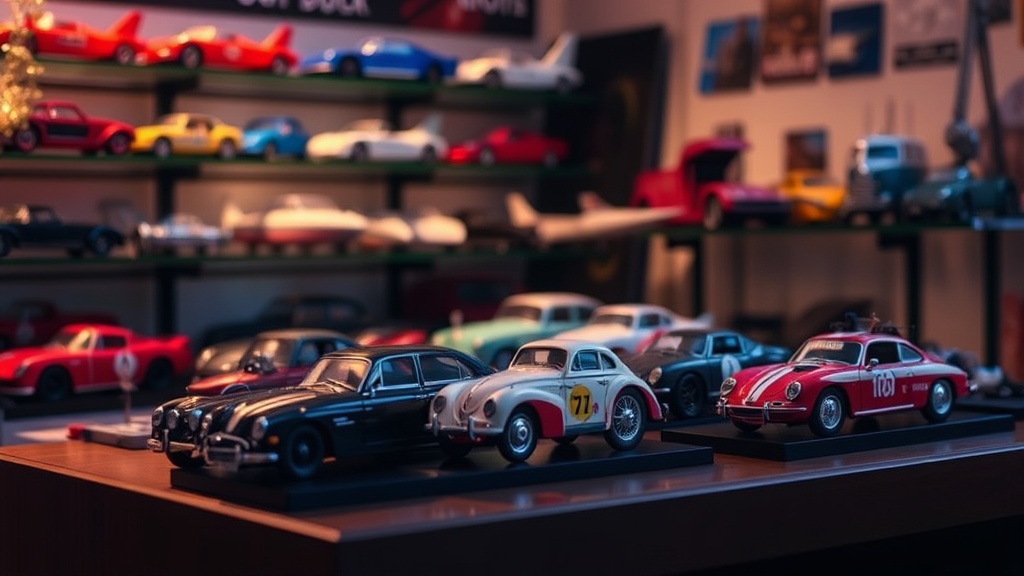
Complete Guide to Displaying Your Scale Model Collection

What This Guide Covers
This guide walks through practical methods for showcasing scale model collections—whether die-cast cars, military vehicles, aircraft, or figurines. Display isn't just storage. Done right, it protects investments, preserves condition, and transforms a hobby into something worth sharing. You'll find specific product recommendations, lighting strategies, dust management, and layout ideas that work in apartments, dedicated rooms, or modest shelves.
How Should You Display Scale Models Without Damaging Them?
The safest approach combines controlled lighting, stable shelving, and protection from dust, humidity, and direct sunlight. Scale models—particularly those with delicate photo-etched parts, hand-painted details, or decals—degrade quickly in poor conditions.
Start with the cabinet. Glass-fronted display cases remain the gold standard. IKEA's DETOLF dominates the hobby community for good reason—it's affordable (around $70), offers four adjustable glass shelves, and measures 16 3/4" wide by 64 1/8" tall. That vertical footprint maximizes wall space while keeping dust out.
The catch? DETOLF units aren't perfect. The glass shelves lack lips, so models can slide during earthquakes or if bumped. Hobbyists solve this with Museum Gel or QuakeHold! putty—clear, removable adhesives that anchor models without residue. For heavier pieces (large 1:18 die-cast vehicles, resin kits), consider the Container Store's Modular Display Cases with built-in shelf lips.
Humidity matters more than most collectors realize. Wood absorbs moisture. Paint cracks. Metal parts corrode. Ideal relative humidity sits between 40% and 55%. If you're in a coastal area like San Diego (or anywhere with seasonal swings), toss a Eva-Dry E-333 renewable dehumidifier into each case. They're wireless, rechargeable, and cost roughly $15.
Shelving Alternatives for Larger Collections
Not everyone wants glass cabinets. Open shelving—when done carefully—works for budget-conscious collectors or those with massive fleets.
Floating shelves from West Elm's Ledge series handle 1:43 and 1:64 die-cast collections beautifully. They're minimalist, hold 15–20 pounds per shelf, and disappear visually so the models command attention. That said, dust becomes your enemy. Plan on compressed air cleaning every two weeks.
For workshop-style rooms, consider the Husky Heavy-Duty Storage Rack. Steel construction. Adjustable tiers. Each shelf supports 2,000 pounds—overkill for resin figures, perfect if you're storing original boxes below and displaying builds above. Wrap the steel bars with pool noodles or foam pipe insulation to prevent paint chips when placing models.
What's the Best Lighting for Model Displays?
LED strips with a color temperature between 4000K and 5000K (neutral to cool white) reveal detail without distorting paint colors. Avoid warm incandescent bulbs—they cast yellow tones that hide weathering work and make white surfaces look cream.
The Philips Hue Lightstrip Plus offers app-controlled dimming and color adjustment. Priced around $80 for a 2-meter strip, it's an investment. Worth noting: cheaper alternatives like the Govee LED Strip Lights (roughly $20) perform nearly as well if you don't need smart home integration. Both install easily inside cabinet tops using adhesive backing.
Here's the thing about UV light—it's destructive. Even LED sources emit trace ultraviolet. For museum-grade protection, apply 3M UV-filtering window film to display case glass, especially if your setup sits near windows. Sunlight degrades decals, yellows clear coats, and fades box art. No model deserves that slow death.
Direction matters. Top-down lighting creates harsh shadows under wings, wheel wells, and overhangs. Better: front-mounted strips angled 15–30 degrees downward. This "museum lighting" technique—borrowed from institutions like the Smithsonian—minimizes shadows while highlighting surface texture.
DIY Lighting on a Budget
Puck lights from GE or Brilliant Evolution ($10–$15 for a three-pack) run on batteries and stick anywhere. They're dimmer than strips and need replacement every few months, but work for single-shelf displays or temporary setups. Pro tip: buy the remote-controlled versions. Adjusting brightness without opening the case reduces dust disturbance.
How Do You Organize a Large Model Collection?
Group by theme, era, manufacturer, or scale—consistency matters more than the specific system. A visitor should understand your logic within seconds of looking.
Most collectors organize by scale first. It prevents the jarring visual mismatch of a 1:18 muscle car dwarfing a 1:64 truck. Within scale, chronological arrangement tells stories: WWII aircraft progression, evolution of Porsche 911 variants, or the timeline of Star Wars vehicle designs.
| Organization Method | Best For | Drawbacks |
|---|---|---|
| By Scale | Mixed-subject collectors | Can feel disjointed if themes clash |
| By Manufacturer | Brand loyalists (all Tamiya, all AutoArt) | Limits storytelling across brands |
| By Era/Conflict | Military historians | Requires historical knowledge |
| By Color | Visual impact rooms | Sacrifices thematic coherence |
| By Build Date | Personal path tracking | Meaningless to visitors |
That said, don't let organization become paralysis. Rotate displays seasonally. Store 70% of the collection, show 30%. This keeps the room fresh, reduces dust exposure for stored pieces, and gives you something to look forward to when swapping cases.
Creating Themed Dioramas
Individual models impress. Scenes captivate. A 1:35 Tiger II tank on a plain shelf is a model. That same tank positioned on a sculpted base with scattered debris, tank tracks pressed into mud, and a figure assessing the horizon—that's a story.
Woodland Scenics produces affordable diorama materials: Realistic Water ($20), Static Grass applicators ($25), and sculpting plaster. Amazon carries their full line. For urban scenes, MiniArt's Building and Accessories kits provide crumbling European architecture in 1:35 scale.
Space constraints? Try shadow boxes. Deep frames (3–4 inches) from Michaels or Hobby Lobby accommodate simple ground textures and a single vehicle. Mount three in a row above a desk for instant visual interest without floor space sacrifice.
What About Dust and Maintenance?
Dust accumulates. Models attract it like magnets. The key isn't elimination—it's management through barriers, airflow control, and cleaning protocols.
Sealed display cases cut dust by 90% compared to open shelving. If you're using open setups, run a small air purifier (the Levoit Core 300, around $100) in the room. It captures airborne particles before they settle on flat surfaces.
When cleaning becomes necessary, skip compressed air cans—they spit moisture and propellant. Instead, use a makeup brush (Real Techniques or Sonia Kashuk brushes from Target, $8–$12) or a soft camel-hair artist brush. Work top to bottom. Gentle circular motions lift dust without scratching clear coats.
Here's the thing—never clean in direct sunlight. You'll spot imperfections you never knew existed and drive yourself mad. Diffused indoor lighting only.
Long-Term Preservation Tips
Store original boxes flat, never stacked more than three high. Cardboard compresses, corners dent, and limited-edition packaging becomes part of the value. Acid-free tissue paper between models prevents paint transfer if cases shift.
For figures (fashion dolls, anime collectibles, 1:6 scale military), consider the Sideshow Collectibles approach: pose, photograph, then return to neutral positions. Extended elbow and knee bends stress joints and fabric over years. Silk and leather outfits especially—keep them out of direct light and rotate clothing on figures quarterly.
Expanding Your Display Over Time
Collections grow. Plans should account for that inevitability.
Modular systems win here. The IKEA BILLY bookcase with OXBERG glass doors scales horizontally—add units as needed. Each holds roughly forty 1:43 models or twenty 1:18 vehicles. Total investment per bay: $150–$200. Comparable systems from Sauder or South Shore run cheaper but use MDF instead of particleboard—less durable long-term.
Lighting should daisy-chain. Buy LED strips with extension connectors. When you add a cabinet, splice in new segments rather than wrestling separate power supplies and remotes.
The ultimate display? That's personal. For some, it's a climate-controlled room with track lighting and glass everywhere. For others, it's a single well-lit shelf with six carefully chosen pieces. Both approaches are valid. Both benefit from intentionality—choosing what to show, how to light it, and how to protect it.
Start with one good case. Add lighting that flatters. Arrange with purpose. The collection deserves that care. You'll find yourself walking past it more often, pausing to appreciate details you'd forgotten. That's the point, isn't it? Not ownership—appreciation.