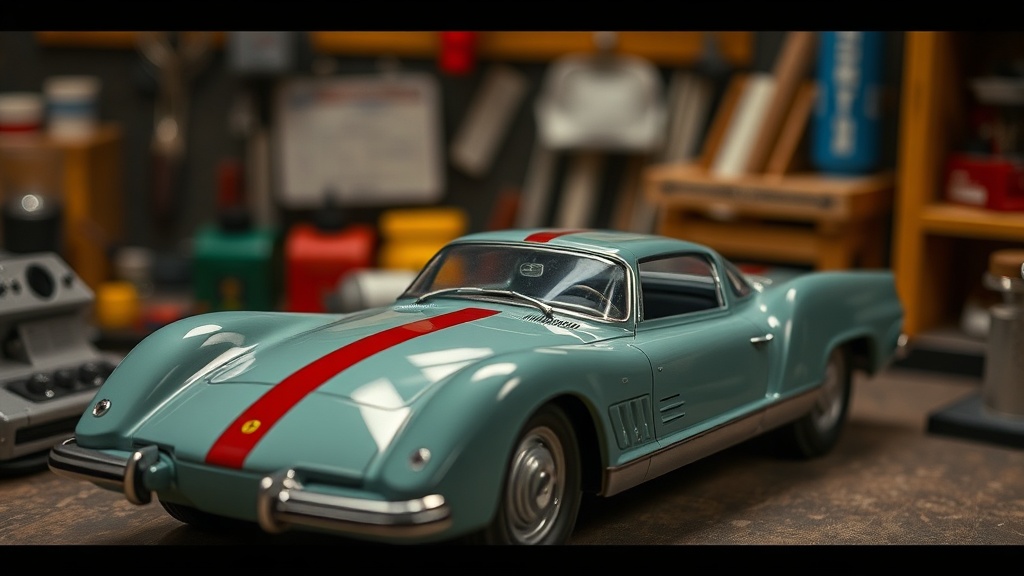
Breathing New Life into Old Plastic: A Guide to Vintage Scale Model Restoration

Reclaiming the Past: Why Restore Vintage Scale Models?
Imagine stumbling upon a forgotten gem—a vintage scale model, perhaps tucked away in a dusty box at an estate sale, or a cherished childhood relic unearthed from an attic. It carries the weight of history, a tangible piece of the past, but time hasn't been entirely kind. Faded paint, brittle plastic, missing parts, or accumulated grime might obscure its original glory. This isn't just about repairing a toy; it’s about honoring a piece of modeling history, rediscovering the craftsmanship of yesteryear, and extending the life of an item that resonates with personal or collective nostalgia. This guide will walk you through the careful, methodical process of restoring these cherished pieces, focusing on practical techniques for bringing them back to a display-worthy, or even competition-ready, condition. It’s an exercise in patience and precision, rewarding you with a revitalized model and a deeper connection to your collection.
How do you thoroughly assess a vintage scale model for restoration?
Before any tools touch the model, a comprehensive assessment is your first, and most important, step. Think of it as forensic work: understanding the model's story through its wear and tear. Begin with a meticulous visual inspection under good lighting. Look for obvious signs of damage such as cracks, broken components, missing pieces, warping, or significant paint loss. Pay close attention to delicate areas like antennae, landing gear, or fine railings—these are often the first to suffer. Note the general condition of the plastic or other materials; older plastics can become brittle, and some early resins might show signs of degradation.
Identifying the materials used in the model’s construction is also key, as different materials require different restorative approaches. Most vintage scale models are polystyrene plastic, but some might incorporate metal parts, vinyl tires, or even early forms of resin. Each material reacts uniquely to cleaning agents, adhesives, and paints. Document everything with clear, well-lit photographs from multiple angles. These “before” shots aren’t just for showing off your hard work later; they serve as a critical reference during the restoration process, helping you remember original part orientations, paint schemes, and decal placements.
Next, a gentle initial cleaning can reveal the true extent of the model's condition. Use a soft brush—an old, clean makeup brush works wonderfully—to remove loose dust and cobwebs. For more stubborn surface grime, a very mild soap solution (like dish soap diluted in warm water) applied with a soft cloth or cotton swab can work wonders. Avoid harsh chemicals, especially on older plastics, as they can cause irreversible damage or discoloration. If the model is heavily soiled or requires partial disassembly for repair, carefully consider the adhesive used. Many older models were assembled with traditional plastic cement, which can be tricky to separate without damage. If you suspect super glue (cyanoacrylate) or epoxy, gentle heat might help, but proceed with extreme caution and test on an inconspicuous area first. The goal here is observation and gentle preparation, not aggressive intervention. For deeper dives into material identification and their historical properties,